
Identifying an unknown plant has become much easier with advances in smartphone cameras and artificial intelligence. Nowadays, simply photographing a flower, leaf, tree, or other plant species is enough for a application Compare the image with large databases and suggest possible identifications.
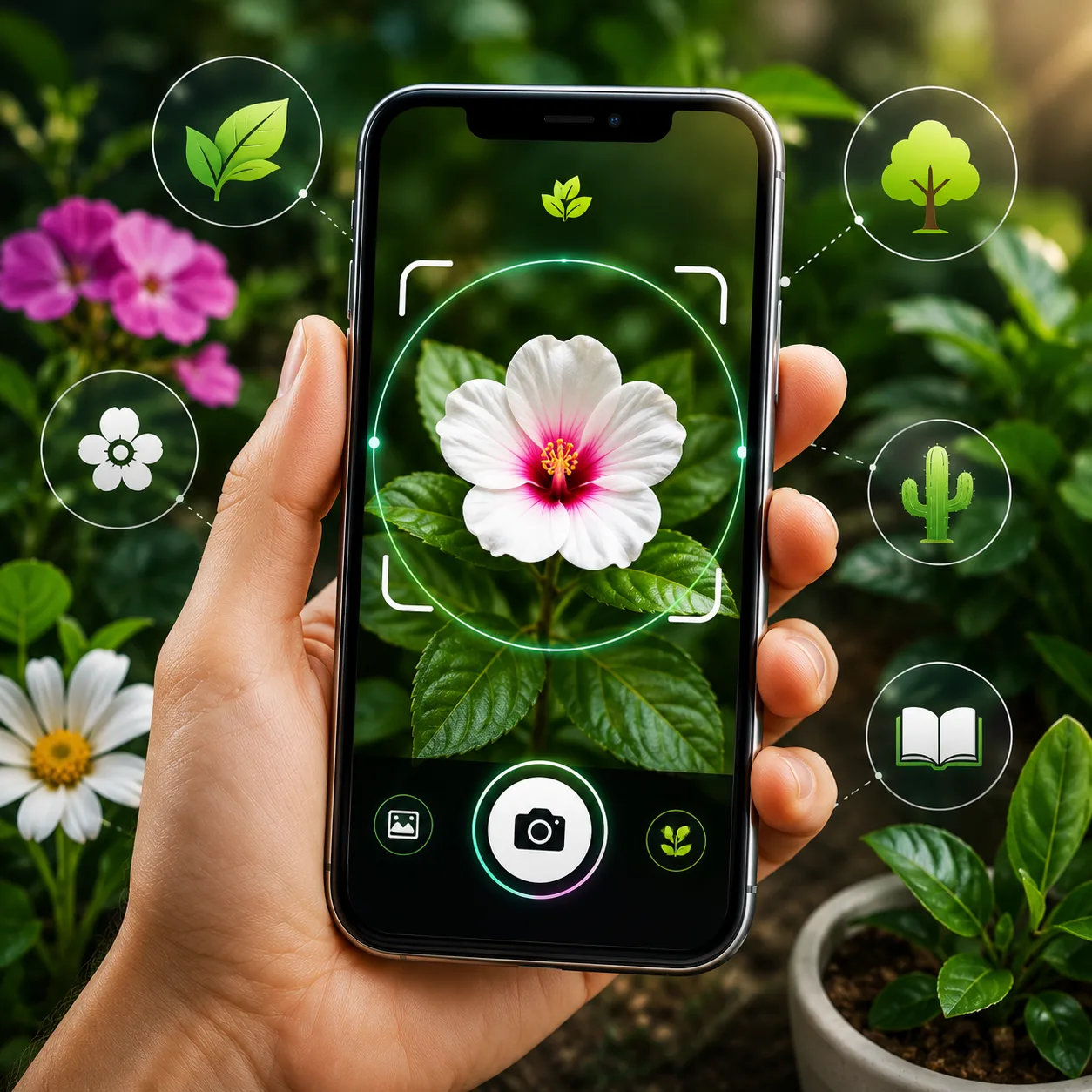
This type of tool can be useful for gardeners, students, travelers, farmers, or simply people curious about nature. In addition to the names of the species, some apps provide information about their characteristics, geographic distribution, and necessary care.
Next, discover some of the best plant identification apps that can be used by people in different parts of the world.
PlantNet
PlantNet is one of the best-known alternatives for plant identification using photographs. application It functions as a collaborative project related to biodiversity, using images and observations to aid in the recognition of different species.
The process is quite simple. The user photographs the plant and indicates which part appears in the image, such as leaf, flower, fruit, or bark. The tool compares the photograph with existing records and presents visually similar species.
One important advantage lies precisely in its focus on botanical identification. Instead of functioning merely as a generic image recognition tool, PlantNet is specifically designed for plants.
To achieve better results, it's worth photographing different parts of the same species. A well-lit image of the flower combined with photographs of the leaves, for example, can provide more useful information for identification.
O download It can be performed on mobile devices, making the app especially convenient during walks, trips, visits to parks, and outdoor activities.
PlantSnap
Another quite popular option is PlantSnap, developed specifically to recognize plants using images. According to information provided by the service itself, its database includes hundreds of thousands of plant types, and the application has a community present in more than 200 countries.
To use the tool, simply point the camera at the desired species or select a photograph stored on your phone. The system analyzes visual characteristics and provides a possible identification.
PlantSnap isn't limited to flowers. It can work with different categories, including trees, leaves, succulents, cacti, and even mushrooms. The app's page states its ability to identify more than 600,000 types of plants and related organisms.
Another distinguishing feature is the inclusion of resources related to plant care. After identification, the user can find information that helps them better understand specific species and their needs.
O download PlantSnap is available for mobile devices, with a free version and additional features offered within the app.
PictureThis
PictureThis combines photo identification with features primarily aimed at people who grow plants at home or in their garden.
The identification process follows a well-known dynamic: the user opens the application, The user photographs the plant and awaits image analysis. Within moments, suggestions related to the species found are presented.
One of the interesting points is that the proposal goes beyond simply stating the name of a plant. PictureThis also stands out for its tools and content related to plant care, making it especially interesting for those who maintain a plant collection.
This means the app can accompany the user after the initial identification. Instead of simply discovering what that unknown plant is, it's possible to access useful information to better understand its characteristics.
Before performing the download, It is advisable to check which features are available for free and which require a subscription, as certain advanced tools may be part of paid plans.
Seek by iNaturalist
Seek is an interesting alternative for those who want to transform nature exploration into a more interactive activity. Developed within the iNaturalist ecosystem, it allows you to recognize not only plants, but also other organisms found during outdoor activities.
O application It uses the smartphone's camera to analyze what is being observed. Thus, during a walk in a park or trail, for example, the user can point the device at different species and try to identify them.
One interesting feature is its educational and exploratory approach. Seek uses elements such as challenges and achievements to encourage users to observe the biodiversity around them.
Because it's not exclusively dedicated to gardening, it's especially suitable for people interested in nature in general. After the download, It can be used on trips and outings to learn more about plants and other living things found along the way.
iNaturalist
For those who want to go beyond a simple automatic identifier, iNaturalist is an excellent alternative. The platform combines recognition technology and a large community interested in biodiversity.
The user can photograph a plant and record their observation on the platform. application. The system provides identification suggestions, while other community members can contribute to correctly determining the observed species.
This collaborative model is particularly interesting when automatic identification fails to provide a sufficiently specific answer. Community participation adds a second layer of analysis to the observations.
Furthermore, the records made on iNaturalist can contribute to projects related to citizen science and the study of biodiversity. In this way, photographing a plant ceases to be merely an activity of personal curiosity.
O download It is a good choice for students, amateur naturalists, travelers, and people who want to record the species found in different places.
Google Lens
Google Lens isn't exclusively an app for identifying plants, but it can be an extremely practical tool for that purpose. Its visual recognition technology allows it to analyze objects in photographs, including flowers, trees, and other plant species.
On compatible mobile phones, the feature may be integrated with Google services and applications. The user can photograph a plant or use an image already stored on the device and request a visual search.
One of the advantages is its practicality. Because Lens works with Google's visual search, the results can quickly direct you to pages containing photographs and information related to the species found.
The feature can also be used for many other tasks, such as recognizing products, searching for objects, and translating text using the camera. Google itself presents plant identification as one of the possibilities of its visual search.
Therefore, for those who already have Google services installed, it may not even be necessary to do the... download from a dedicated identifier.
LeafSnap
LeafSnap is another alternative for people who want to use artificial intelligence to recognize plants. It works similarly to other services in this category: a photograph is analyzed to find possible matches in a species database.
O application It is particularly useful for situations in which the user encounters an unknown plant and wants to quickly obtain an indication of its name.
After identification, it is recommended to compare the information presented with other sources, especially when there are visually very similar species.
This recommendation also applies to any identification application. Despite the evolution of artificial intelligence, none of these tools should be considered infallible.
Which plant identification app should I choose?
The best choice depends primarily on each person's objective. For those seeking a platform specializing in biodiversity and collaborative identification, PlantNet and iNaturalist are interesting alternatives. Those wishing to combine recognition with care information might consider PlantSnap or PictureThis.
Seek is an attractive option for transforming nature walks into educational experiences, while Google Lens offers convenience for those who prefer to use a tool that is likely already available on their mobile phone.
Since the results are primarily derived from image analysis, it is important to provide good photographs. Whenever possible, photograph leaves, flowers, fruits, and other plant features separately and use natural lighting.
It is also advisable to compare the results in more than one [source]. application When identification is important. This is especially necessary before consuming plants, using species for medicinal purposes, or making any decision that may pose risks.
With so many options available for download, Identifying plants is no longer a task restricted to specialists. Using a smartphone camera and choosing the right tool, anyone can learn more about the species found in gardens, parks, forests, or during travels around the world.
